Categories
Tags
Posted by News Editor
Filed in Politics 277 views
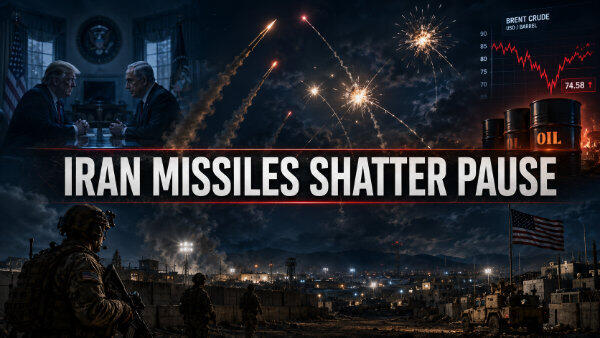
Iran Fires Missiles at U.S. Forces, Shattering Fragile Middle East Truce
Missiles were flying over the Middle East again on Tuesday after Iran launched what U.S. Central Command called a "surprise attack" on American forces stationed in the region. Centcom said in a statement that at 5:45 p.m. ET, Islamic Revolutionary Guard Corps forces launched multiple ballistic missiles from Iran in an attempted surprise attack on U.S. forces based in the Middle East. The command added that all the missiles were intercepted and that American troops remained on high alert.
The base targeted was in Jordan, according to reporting that cited Axios, with CNN putting the number of missiles fired at four. It was the first publicly disclosed attack on U.S. service members in the region since President Trump ordered a halt on attacks against Iran the previous week. Unverified footage circulating on social media had shown air defense systems active over Jordanian skies earlier in the day.
The strike effectively ends a brief pause in hostilities that followed weeks of intense fighting between Washington and Tehran. The wider conflict, which began with U.S. and Israeli strikes on Iran in February, has seen repeated cycles of escalation and de-escalation, including a deadly attack in Jordan earlier this month that killed American service members and triggered days of retaliatory U.S. airstrikes.
Notably, Iran's missiles struck hours after Trump met at the White House with Israeli Prime Minister Benjamin Netanyahu, their first in-person meeting since the two countries began joint strikes on Iran. Oil markets reacted to the news, with prices partially rebounding after a sharp drop earlier in the week tied to reports that Washington was pausing plans to further escalate the war.
Whether this latest strike forecloses renewed diplomacy remains uncertain. Talks between Iran and Oman aimed at reopening shipping through the Strait of Hormuz had been underway, and officials on both sides have periodically signaled openness to negotiation even amid continued fighting. For now, though, the pattern that has defined this conflict for months has reasserted itself: a lull, followed swiftly by fire.